Get In Touch
By - Raghav Daksh
11/28/2025
11
Farming today is no longer just about soil, bullocks, and monsoon timings. It is increasingly about data, machines, and smart decision-making. The same work that once depended only on muscle power is now supported by mobile apps, scientific soil testing, and advanced machinery. From a small farmer renting a tractor in a North Indian village to a giant farm in the USA using satellites, technology is silently reshaping how food is grown and sold.
This change is not happening overnight, and it does not look the same everywhere. Some farmers are just starting with basic tools like high-yield seeds and tube-wells, while others are already experimenting with AI, drones, and GPS-guided tractors. Understanding this spectrum helps us see both the opportunities and the risks in the future of agriculture.
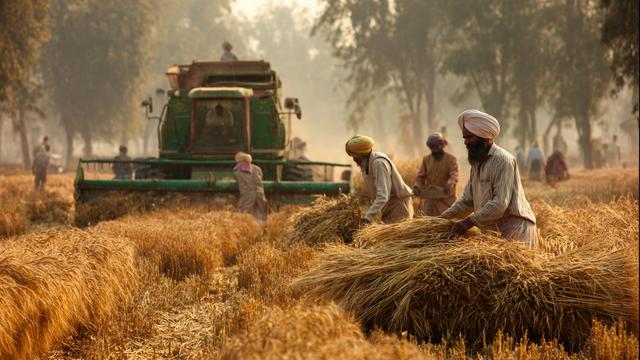
On small farms, even simple tools can be revolutionary. High-yielding variety (HYV) seeds, mobile phones, tube-well irrigation, and rented tractors are often the first door to modern farming. A farmer can now call an agricultural officer, join a WhatsApp group, watch a short YouTube video, or check the weather forecast before deciding when to sow seeds or apply fertilizer. These actions take only a few minutes but can prevent crop loss and save money.
Mobile phones have quietly become one of the most powerful tools in the field. Farmers can compare mandi prices before selling, get advisory messages from government schemes, or learn about new pests spreading in nearby districts. For a small farmer, these “small” upgrades mean better yields, fewer surprises, and slightly more bargaining power when standing in front of a trader.
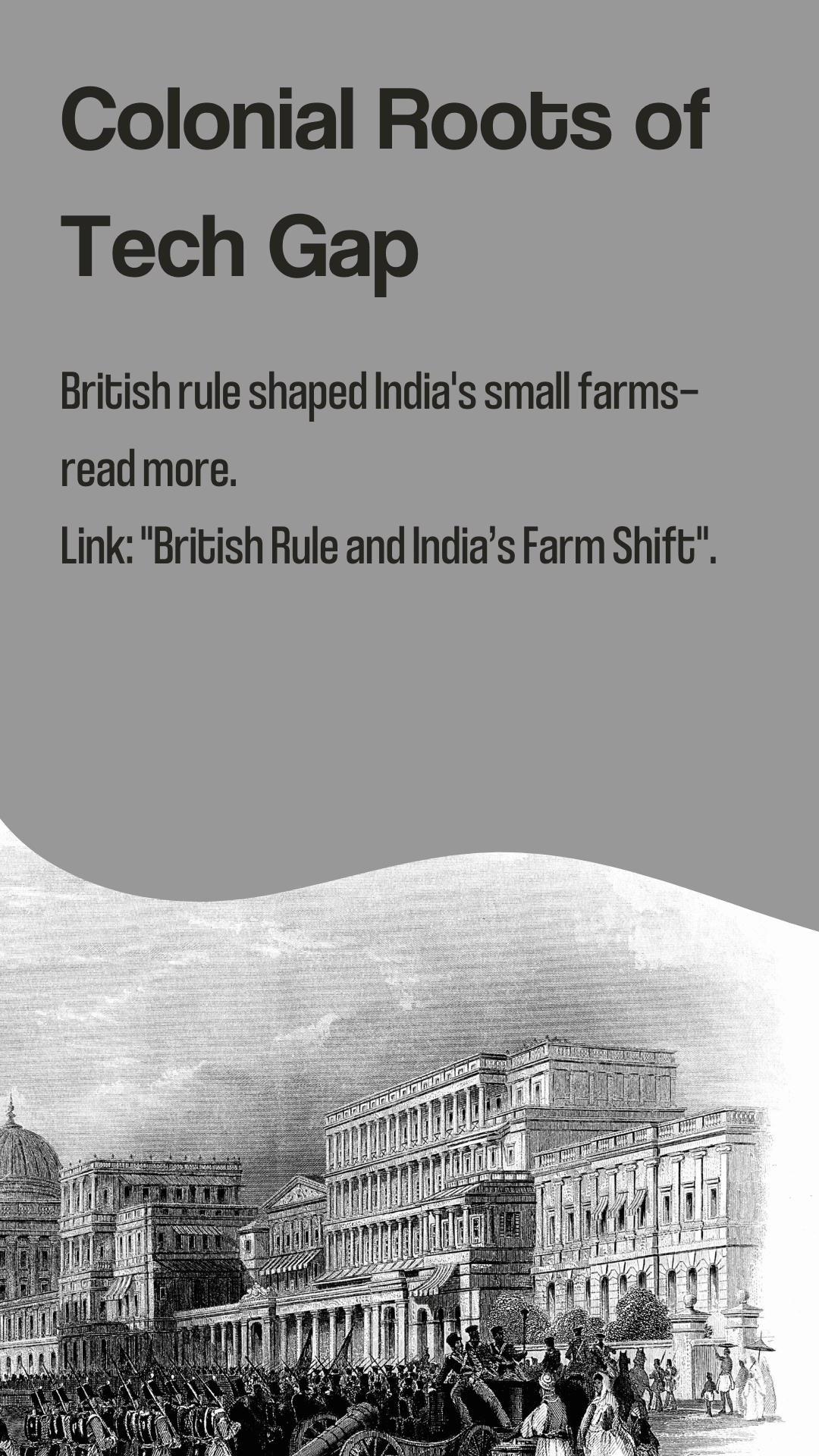
The way farms look today, especially in countries like India, is deeply connected to how colonial rule reshaped land, crops, and rural power structures. If you want to understand how this tech gap and land pattern actually began, you can also read my blog “British Rule and India’s Farm Shift” for a deeper historical angle and then come back to see how that legacy continues in modern fields.
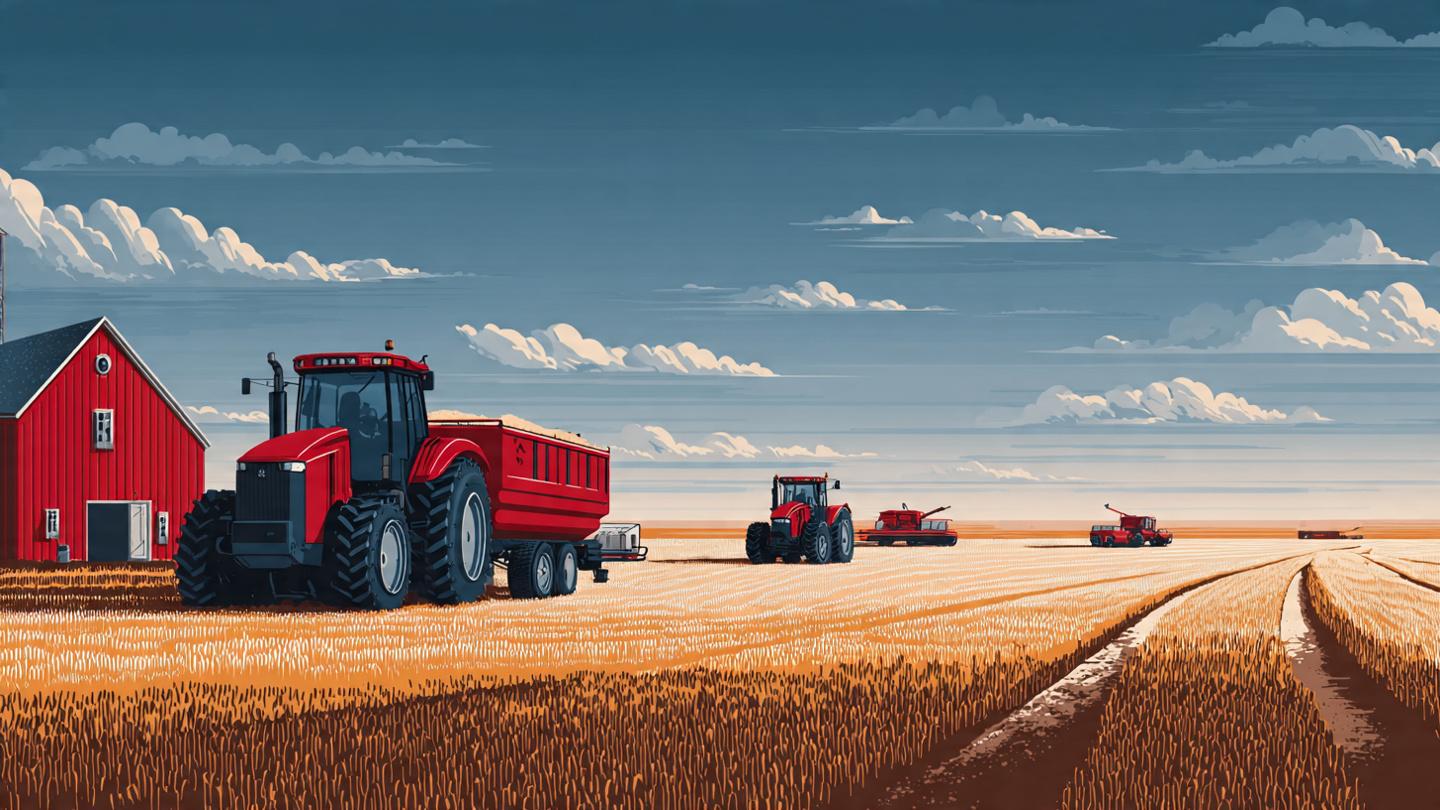
On large commercial farms, especially in developed countries, technology goes many steps further. Farmers use GPS-guided tractors to sow in straight, efficient lines, soil testing labs to check nutrient levels, and satellite images to monitor crop health from above. Computers and software tell them exactly how much water or fertilizer each part of the field needs, instead of treating the entire farm as one uniform block.
Here, farming is run almost like a company. Data is collected, analyzed, and used to cut costs and maximize profits. Automated storage systems protect grains from moisture and pests until market prices rise. Contracts with buyers, crop insurance, and precision input use turn agriculture into a carefully calculated business, not just a yearly gamble on the rains.
This contrast creates a visible tech gap between low-tech and high-tech farms. On one side, a small farmer might still depend on family labor, rented machines, and local moneylenders. On the other side, a large farmer could be using sensors, drones, and AI-based platforms to predict yield and detect diseases early. The difference shows up in productivity, incomes, and resilience to shocks like droughts or sudden price crashes.
However, this gap is not fixed forever. Many startups, cooperatives, and government schemes are trying to bring parts of this advanced toolkit to small farmers. Shared machinery centres, custom hiring of tractors and harvesters, digital advisory apps, and farmer-producer organisations (FPOs) are all attempts to reduce this technological distance. The key question is whether these tools will become truly affordable and accessible to every village, not just a privileged few.
Digital agriculture is slowly turning the field into a place of constant information flow. Weather apps warn about heavy rain or heatwaves, helping farmers plan irrigation and harvesting. Soil testing reports guide the correct dose of fertilizer instead of random guesswork. Some platforms even connect farmers directly to buyers, reducing middlemen and helping them get a fairer share of the final price.
As internet access expands, even an entry-level smartphone can give a farmer more knowledge than a whole stack of old pamphlets. Smart sprayers, drip irrigation systems, and low-cost sensors are becoming more common, especially where state governments and agri-tech startups actively collaborate. If managed well, this digital layer can reduce waste, protect the environment, and put more control back into the farmer’s hands.
The big worry is that technology might only help those who are already better off. Large farmers find it easier to buy machines, pay for consultants, and experiment with new systems. Small and marginal farmers, who form the majority in countries like India, often struggle to take on risk or debt for innovation. Without careful planning, technology can widen existing inequalities instead of solving them.
But the same tools can also be powerful levellers. If small farmers get access to shared machinery, community storage, digital advisory, and fair markets, they can use technology to escape the cycle of low returns. The future of agriculture will be shaped by these choices: who gets access to what tools, on what terms, and with how much support and training.
The ideal future is not where every field has a robot, but where every farmer has the right mix of knowledge, tools, and support. A one-hectare farm in India and a 300-hectare farm in the USA do not need to look identical, but both can use science and innovation to reduce risk and increase stability. The goal is not just more production; it is more dignity, security, and agency for the people who grow our food.
If policy, technology, and education move together, the phrase “smart farming” will stop sounding like a buzzword and start describing normal, everyday practice, even in the smallest village. That is when tech will truly meet the tractor in a meaningful way, not as a showpiece, but as a daily partner in the farmer’s work.
📱 Make Learning Stress-Free with Paathshala!
Looking for a better way to help your child learn without the rote memorization? Download the Paathshala App today for interactive lessons that kids actually enjoy.
👉 Download for Android: click here
👉 Download for iOS: click here
tags:
[modern farming in india, agricultural technology, small vs big farms, indian farmers and technology, future of agriculture, farm mechanisation, digital agriculture, gps farming, smart farming india, impact of technology on agriculture, history of indian agriculture, british rule and indian farmers, farm inequality, agri tech startups india]




Check out our other posts!

CBSE 2026: 10 Changes You Must Know
19
- Apeksha Negi
10 Reforms & What They Mean for Your Child’s Future

Board Exams: How To Beat The Stress
17
- Apeksha Negi
Help your child overcome the pressure
British Rule & India’s Farm Shift
14
- Raghav Daksh
From Food Security to Cash Crops: The Lasting Impact of British Rule on Indian Farmers.

British Impact on India
46
- Raghav Daksh
From trade to empire: The story of how Britain reshaped India’s destiny

 +91 7389453300
 @paathshala.app
 +91 7389453300